 |
||
        |
||
 |
||
About Chicago Restaurants Museums Attractions Shopping Architecture Facts |
|
 It Happened Here First
Chicago produced the first:
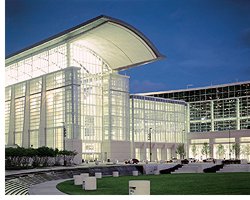
Chicago is home to the first totally fire-proof hotel, the Palmer House Hilton at State and Monroe Streets. Chicago's own Jane Addams, founder of the Hull House, was the first American woman to win the Nobel Prize for Peace (1931). The Hull House opened in 1889 to aid Chicago immigrants. The first Ferris Wheel made its debut in Chicago in 1893 at the World's Columbian Exposition. Hugh Hefner started "Playboy" magazine in 1953. The first issue sold for fifty cents and featured Marilyn Monroe. The term "Jazz" was coined in Chicago in 1914. The city's native musicians included band leader Benny Goodman and drummer Gene Krupa. Frank Sinatra introduced the song "My Kind of Town (Chicago Is)" in the 1964 Warner Brothers musical "Robin and the Seven Hoods." The song was voted best motion picture song of 1964 by the All American Press Association. Founded in 1848, The Chicago Board of Trade is the world's oldest and largest futures and options exchange. The world's largest gum manufacturer, William Wrigley, Jr. Company, produces more than 20 million packages a day. It was also the first U.S. manufacturer to give its employees Saturdays and Sundays off of work. Chicago's Famous Buildings The first of Marshall Field's Clocks was installed at the corner of Washington and State Streets on November 26, 1897. The cast bronze clock rests some 17.5 feet above the sidewalk and weighs a hefty 7.75 tons. Tribune Tower, home of the Chicago Tribune newspaper, has exterior walls that are embedded with pieces of famous buildings more than a "stone's throw away" from Chicago, including authentic stones from Westminster Abbey, the Alamo, Hamlet's castle, the Great Pyramid, the Taj Mahal, Fort Sumter and the Arc de Triomphe. The Wrigley Building's landmark clock tower is patterned after the Giralda Tower in Spain. Under instructions from William Wrigley, architects designed the Wrigley Building to look like a "luscious birthday cake." In 1946, the Wrigley Building was also the first air conditioned office building. The Sears Tower is the world's tallest building with 110 floors. The Merchandise Mart is the world's largest commercial building with 4.2 million square feet. Chicago's McCormick Place offers the largest amount of exhibition space in North America with 2.2 million square feet. What's In A Name? The title "Windy City" was given to Chicago by New York Sun editor Charles Dana in 1893. He was tired of hearing long-winded politicians boasting about the wonders of the World's Columbian Exposition held in Chicago the same year. The Fannie May candy stores were opened in Chicago by real estate broker Archibald Teller in 1919. There was never a real Fannie May; it was a name that Teller thought sounded like a candy maker. Sports In Chicago Founder and coach of the Chicago Bears professional football team, George Halas organized the American Professional Football Association in 1920, the forerunner to the National Football League. The Chicago Bears were the first football team in the country to:
|